
- Solutions
Solutions

Enterprise
Next-gen communication solutions to keep you on top.

Small Business
Flexible, feature-rich solutions that drive growth.

Midsize Business
Scalable tools that evolve at the pace of business.
- Products
Products

Unified Communications Solution (UCaaS)
Stay connected wherever you are, across all channels.

Contact Center (CCaaS)
Omni-Channel Contact Centers give you total control.

SIP Trunking
Transition your traditional phone system onto the internet.

Managed Services
Lighten your workload and leave network upkeep to us.

POTS Line Replacement
Modernize your business and get rid of POTS Lines.

Connectivity
Fast, reliable, and secure network connections.

Integrations
Share data in real-time with seamless integrations.
- Industries
Industries
- Support
Support

Resources
Take a deeper dive into our industry expertise.

FAQ’s
Have a question? We’ve got the answer.

Contact Us
Reach out and we’ll get right back to you.
- About Us
About Us

Why Choose Us
See why our customers stick with Statewide.

Our Team
Meet our skilled and sincere team of experts.

Careers
If you’re tech-centric and ready to help, you’ll love it here.

Success Stories
Read about the real life solutions we provide our clients.

News
Stay up to speed on our latest articles and blogs.

Our Partners
See who we team up with to deliver world-class solutions.

Bizfon
Click here if you’re a former Bizfon customer.

SCI Networks
See how SCI Networks became Statewide Communications.
Jan 08, 2026AI Phone System Features That Improve Customer Satisfaction
Features to Look for in an AI Phone System
How AI Improves the Entire Call Journey and Agent Performance
Article summary
If you’re shopping for a new PBX, an AI phone system (phone system + integrated AI) needs to be at the top of your list. With AI in business communication, here’s what actually moves the needle:
- AI call routing that gets callers to the right person faster.
- AI transcription + call summaries, which cuts the time of traditional notetaking and helps teams follow up without guessing.
- Sentiment analysis flags tense calls early, so supervisors can jump in before a customer blows up, potentially saving a relationship.
- AI call analytics that easily show what’s happening across your phones (peak hours, call reasons, missed calls), so staffing and training stop being a hunch.
If you want to see these features in action, start here: AI Phone System.
The complete call journey is where good businesses win or lose
At any given time, the “normal” workday can change in an instant. Right before the morning shift begins on a random Tuesday, you get two different members of your customer support team calling out. It’s nobody’s fault, but life happens. You prep the remaining members of the team that you’ll be short-staffed and pull people from other teams into the queues to help compensate. After a few hours, calls begin to stack up.
The problem is that when a customer gets through, they try to navigate the menus but instead get bounced twice. By the time they reach the right person, they’re already annoyed, and you’re already behind. This type of scenario has quickly turned from a phone system problem to a revenue and reputation problem.
It must be said that AI won’t fix sloppy processes by itself. Businesses of all sizes are learning this lesson the hard way: AI works best when you use it for specific, practical jobs, not as a fix-all magic wand.
So, in this article, we’ll be showcasing the AI features that actually improve outcomes across the entire call journey, from “hello” to “problem solved.”
What makes an AI phone system different from a traditional one?
A traditional phone system connects calls. That’s it.
An AI-powered system acts more like a helpful assistant that’s listening with permission, taking notes, spotting patterns, and helping you make or receive calls like a business process instead of a daily surprise.
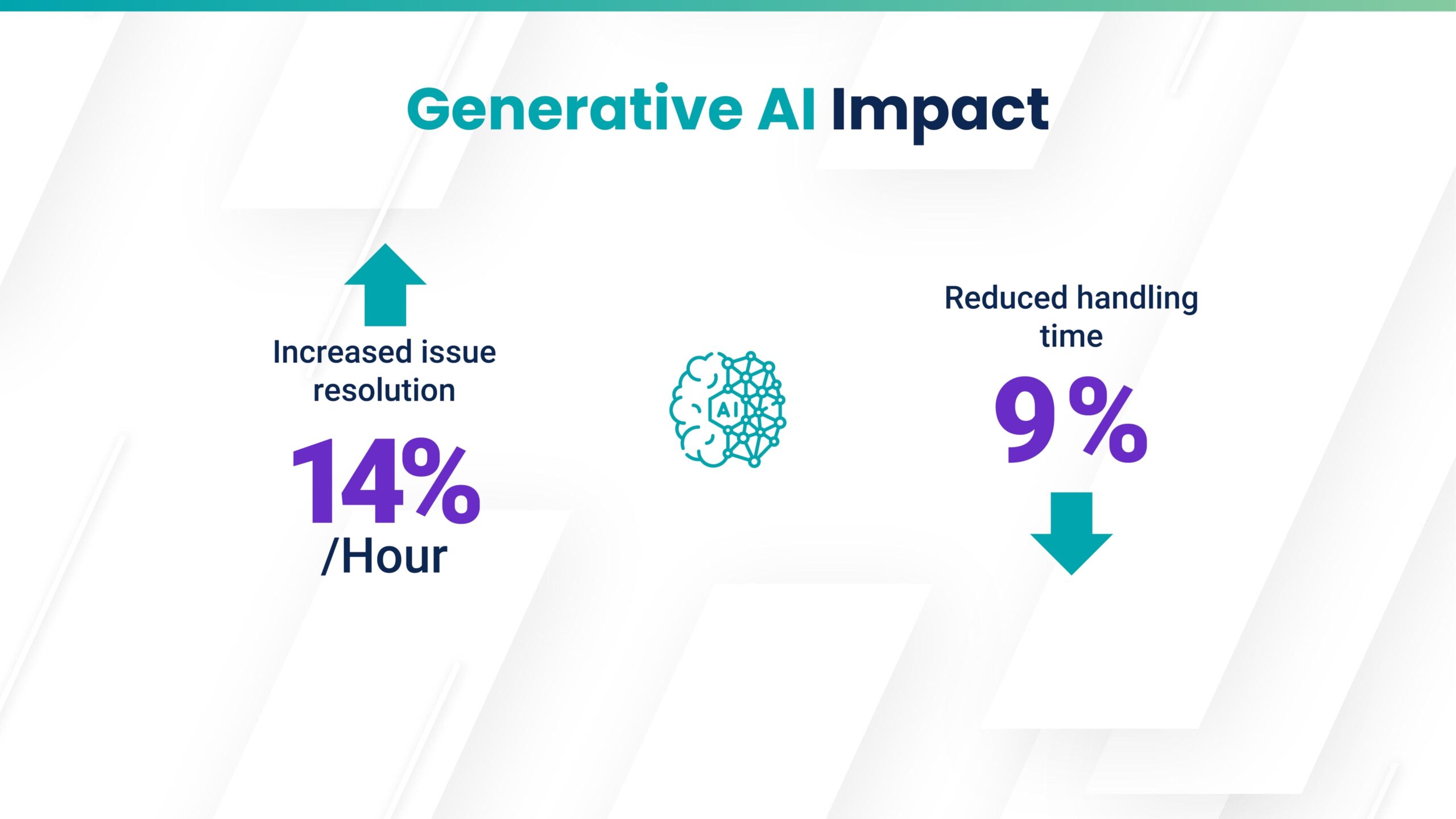
And there’s real upside here, especially with customer operations. A recent report from McKinsey points out that a big chunk of generative AI’s value shows up in customer operations, because it can take routine inquiries and repetitive work off people’s plates and speed up resolution.
For example, a deep dive into a company with 5,000 customer service agents found that:
- Generative AI increased issue resolution by 14 percent an hour and reduced the time spent handling an issue by 9 percent.
- Due to its quality of help, gen-AI also reduced agent attrition and requests to speak to a manager by 25 percent.
The goal of introducing AI into your process isn’t to replace your team. The goal is to reduce time spent on repetitive tasks, which positively increases the customer experience.

The top AI phone system features that improve the entire call journey
1) Advanced call routing that reduces wait time and repeat calls
When people mention AI call routing (or intelligent call routing), they’re usually referring to ending the practice of dumping everyone into the same queue.
AI-supported routing can help match callers to:
- the right department
- the right skill set
- or the right location, without a receptionist playing telephone tag
That matters because the first few seconds set the tone for the entire interaction. Contact centers often measure performance using service metrics like service level and average speed of answer (ASA). A report from Shep Hyken on Customer Service and CX Research found that 66 percent of customers said long wait or hold times when interacting with a company would cause them to leave. Customer experience will immediately improve with fewer transfers, fewer callbacks, and fewer “I already explained this” moments.
2) AI transcription + call summaries because nobody loves after-call paperwork
After a call ends, the work doesn’t stop. The person answering the call has to:
- type notes
- summarize what happened
- log it somewhere
- and remember to follow up
AI transcription and summarization tackle this after-call work problem head-on by turning conversations into usable notes. This advanced feature also helps with training by accurately showing what good interaction sounds like. It keeps accountability high because there’s an assistant helping you stay true to what was promised. And finally, you get consistency across shifts and supervisor/manager styles; it’s a level playing field.
3) Sentiment analysis that protects customer satisfaction and your team’s sanity
Some calls are fine until a verbal queue isn’t recognized and things take a turn. Sentiment analysis looks for signals that a conversation is going sideways with tone, pace, frustration, and other markers so you can respond faster. That might mean:
- escalating the call sooner
- coaching an agent live
- or flagging the issue for follow-up
4) AI call analytics that turn call data into direct decisions
Most businesses have basic phone data, but it lives in a software land far, far away, disconnected from everything else they do, so it isn’t treated as important. You don’t have to be left alone, struggling through call data without a compass or a map.
AI call analytics help you spot patterns like:
- top call reasons (billing, scheduling, delivery, support)
- peak hours and peak days
- missed calls and abandoned calls
- repeat callers and repeat issues
We’ve seen more and more organizations rethinking their entire customer experience to incorporate AI where it’s a good fit. This tracks because owners and ops leaders don’t want more dashboards. Businesses need answers like:
- “Do we need more coverage at lunch?”
- “Is one location getting slammed with the same issue?”
- “Which calls keep turning into escalations?”
An AI phone system, what it does + who benefits
Feature What it does in plain English What it improves Who usually cares most AI call routing Sends callers to the best next step Lower wait times, fewer transfers Ops, IT, owners Transcription + summaries Writes the notes for you Faster follow-up, fewer mistakes Everyone (especially agents) Sentiment analysis Flags frustrated calls early Fewer escalations, better CSAT Owners, CX leaders AI call analytics Shows call patterns and performance Staffing, training, planning CFOs, ops, IT Common questions about conversational AI and call centers
“Is this going to replace my staff?”
No, and it’s not meant to. AI is great at repetitive tasks and quick summaries. People are still better at empathy and messy, complex situations.
“We don’t have time for a painful switch.”
You shouldn’t have to. We treat a phone system rollout like a guided project: discovery, setup, training, and real support after go-live.

How Statewide’s Contact Center delivers AI-driven value
This is where Statewide Communications earns our customers’ trust and loyalty. The last thing we’ll do is just drop the phone and the new software on your desk and disappear. Our whole position is built around hands-on discovery, training, and support, plus “top-notch support, zero drama” as a real operating mindset.
If you’re evaluating AI Contact Center solutions, the right question to start with is, “Will this actually improve how calls are handled in my business, and will I get support when I need it?”
With Statewide, the answer is yes every time; we’re the difference between a platform and a partner.
It’s clear that AI is a competitive edge when it fixes real call problems
A solid AI phone system helps you answer faster, route smarter, have more successful follow-ups, and improve customer experience with easily accessible proof. For business communication, AI has stripped the veil of hype and has landed squarely in the group of difference makers.
On top of that, when it’s backed by a team that trains you, supports you, and sticks around, it stops feeling like another tech tool and starts feeling like the phones are finally under control.
If you’re interested in learning more about how AI can be an asset for your organization, contact Statewide for a demo.
You may also like
Jan 08,2026
AI Phone System Features That Improve Customer Satisfaction
Features to Look for in an AI Phone System How AI Improves the Entire Call Journey and Agent Performance Article summary If you’re shopping for a new PBX, an AI phone system (phone system + integrated AI) needs to be at the top of your list. With AI in business communication, here’s what actually moves the needle: AI call routing that gets callers to […]
Read MoreNov 21,2025
Giving Thanks for Cloud Phone Services: Reliable Communication Year-Round
During a season of gratitude, a quiet hero emerges: dependable communication. November has a way of putting things into perspective and kicking off a time of reflection. If you’re a business owner or IT leader, you tend to think about the people who keep your company moving and the tools that help them do it. […]
Read More


