5 Tricks (and Treats) for Getting More from Managed Telecom Services

October 13th, 2025

The steady, low grumble from customers comes out when your phones unexpectedly glitch, or their support tickets linger for far too long, or worse, their invoices are jumbled and not created correctly. That’s a scary scenario, especially during your busiest hours. But don’t worry, there’s an upside. When you have the right managed telecom services, you can flip those “uh-oh” moments into calm, predictable operations.

Below are five practical “tricks” to use with your provider, along with the very real “treats” you’ll unlock when you utilize Statewide’s hands-on approach. If that sounds refreshing, stay with us and continue reading.
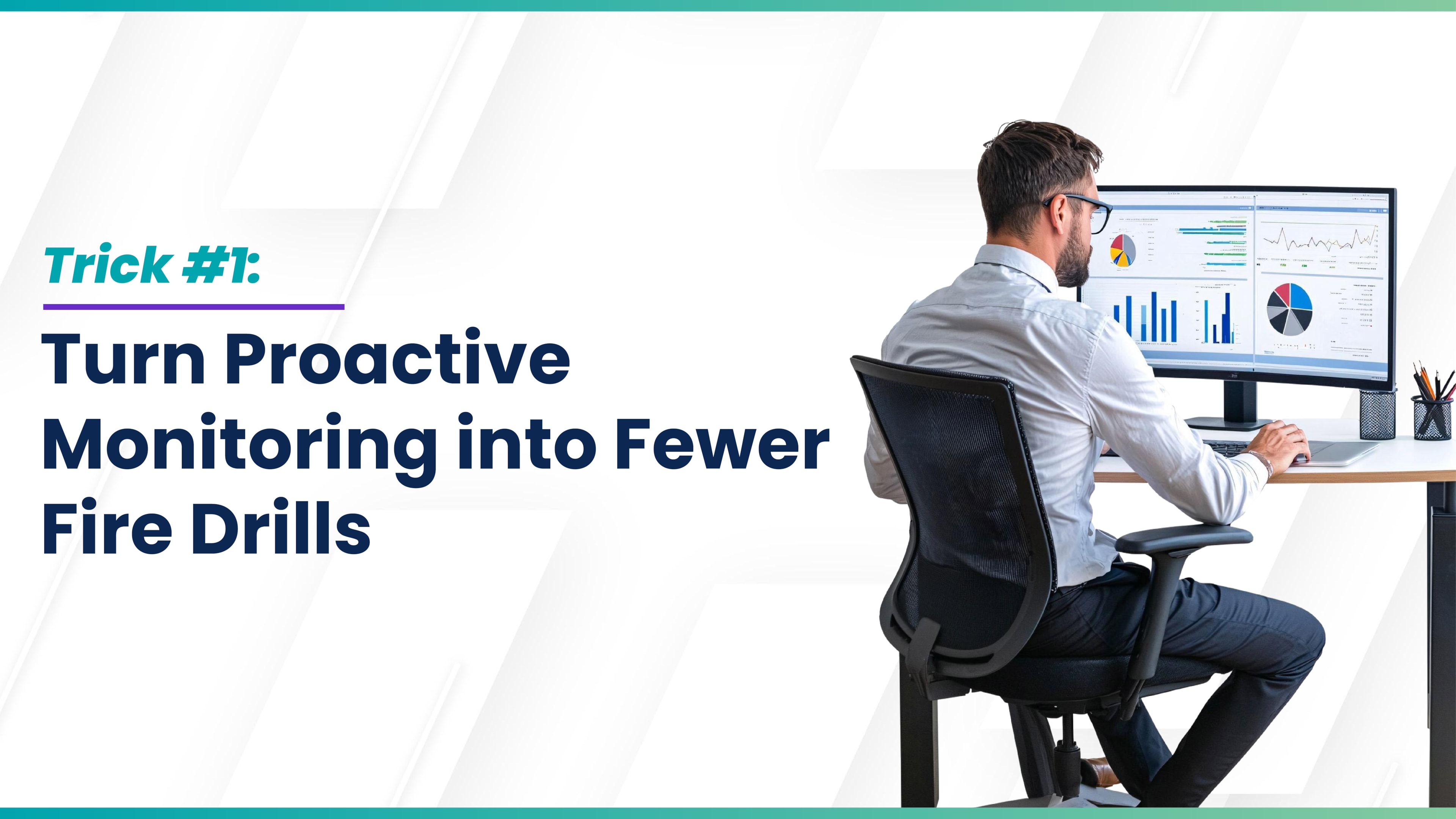
Man reviewing graphs on dual monitors with text “Turn Proactive Monitoring into Fewer Fire Drills,” highlighting network services and telecom operations.

Trick #1: Turn Proactive Monitoring into Fewer Fire Drills

Treat: Faster fixes, fewer surprises, and fewer 2 a.m. texts

Most teams only notice an issue when customers do. It’s time to flip that script. Ask your provider to set always-on monitoring for voice quality (jitter, packet loss), carrier circuits, and critical apps. You should be getting monthly trend reports and real-time alerts that trigger action without you chasing down your provider for answers. 

How to make it work:

  • Agree on clear alert thresholds and who acts on what.
  • Route alerts to the provider’s NOC and your on-call lead, not everyone.
  • Review a simple monthly “top 5 recurring issues” report with next steps. 

Why it matters: Outages are getting costlier, even when they’re less frequent, so catching small issues early is money in the bank.

At Statewide, proactive monitoring is baked into our day-to-day support rhythm, and you get real people who pick up the phone and follow through. That “never leave anyone hanging” mindset is one of our core values.

Smiling man in a suit with text “Clean Up Network Infrastructure Management,” referencing managed services provider and streamlined business operations.

Trick #2: Clean Up Network Infrastructure Management, One Change at a Time

Treat: Clear call flows, happier customers, and faster work

Many call flows grow “organically” over the years with ring groups that forward to the wrong team, auto attendants no one remembers, or QoS (Quality of Service) that was never tuned. A managed services partner should audit, fix, and keep tuning.

Your quarterly tune-up checklist should include:

  • Call routing map: Confirm every menu, schedule, and overflow rule.
  • Quality checks: Prioritize voice/video with QoS and verify ISP service level agreements (SLAs).
  • Analytics: Watch hold times, missed calls, and after-hours behavior to staff smarter.

Real customer example: Bianco & Sons Sausage moved off a misconfigured on-prem system, and we cleaned up routing and improved voice quality. The business stopped losing calls and started moving faster.

Woman using a tablet next to “Patch Management You Don’t Have to Babysit,” focused on managed network services and telecom systems.

Trick #3: Patch Management You Don’t Have to Babysit

Treat: Lower risk without the late-night patch marathons

Phones, SBCs, routers, and apps; everything needs updates. But patching shouldn’t hijack your week. Request a documented patch plan that outlines how those patches are evaluated, scheduled, tested, and rolled back if necessary. 

What “good” looks like (please steal this):

  • Critical security patches within a set window
  • Maintenance windows that respect your peak hours
  • A rollback plan and post-patch verification checklist

This isn’t busywork; federal guidance has long underscored the importance of structured, enterprise patch programs. The US Department of Commerce, National Institute of Standards & Technology, Guide to Enterprise Patch Management Planning SP 800-40 is a fantastic place to begin your journey, along with the related guidance outlining why process matters and how to operationalize it.
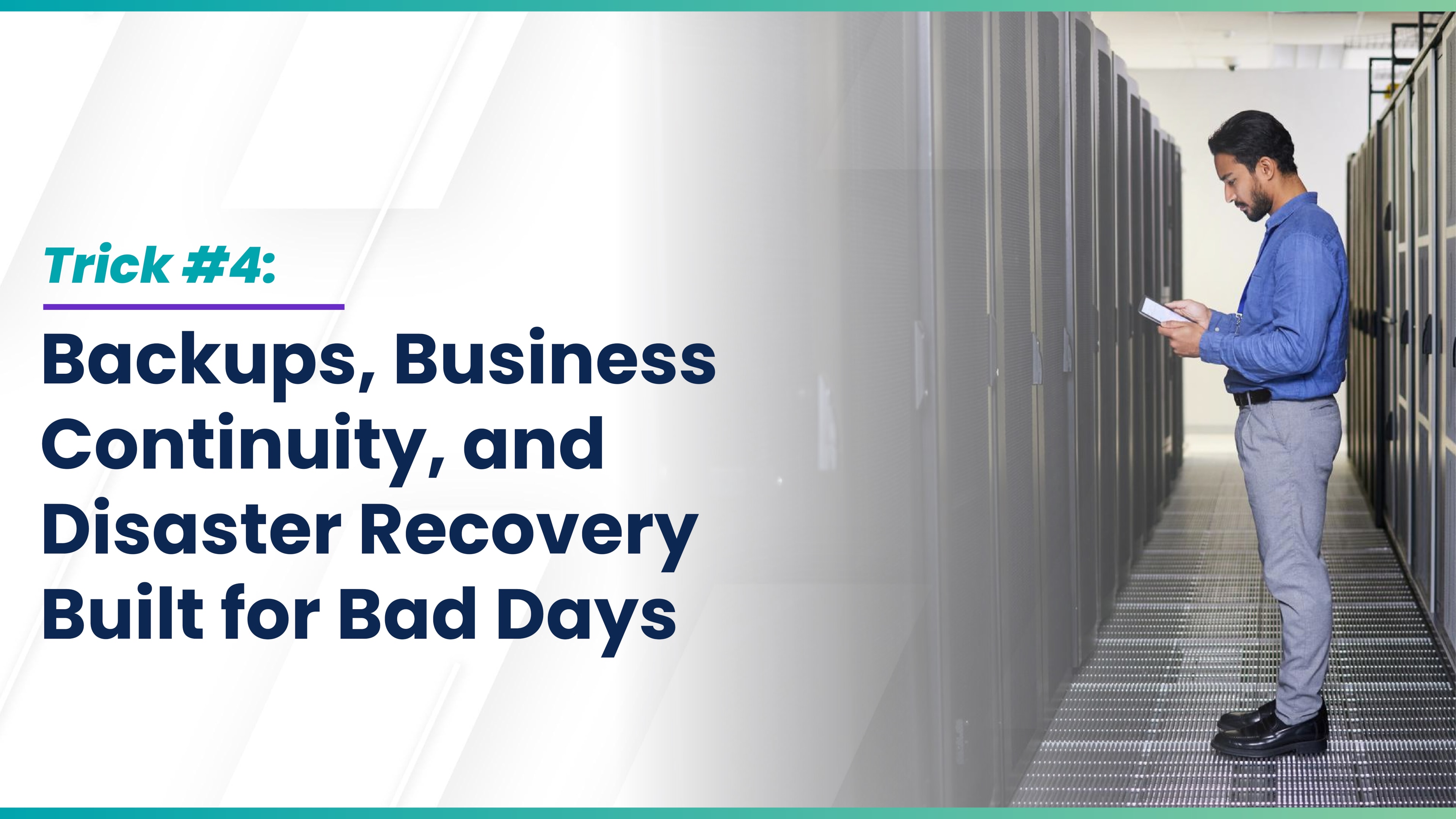
Man in a server room with “Backups, Business Continuity, and Disaster Recovery,” emphasizing managed security services and data analytics.

Trick #4: Backups, Business Continuity, and Disaster Recovery Built for Bad Days

Treat: Calls keep flowing even when the lights blink

Ask your managed telecom services provider to demonstrate how your telecom backups and failover features work, including SIP trunks, LTE/5G failover, redundant call paths, and voicemail retention. Get it in writing; test it quarterly.

Turn “What If?” into “We’re Good.”

Scenario (Trick to implement) What to Verify The Treat You Get
ISP outage LTE/5G voice failover demo Phones and softphones stay live
Site power loss Cloud routing + DR playbook Customers still reach you
Admin mistake Config backups + rollback test Minutes to recover, not days
Ransomware hit Off-platform backups of configs/recordings Faster rebuild, less chaos


Statewide’s cloud approach, combined with our lifetime support culture, means you’re not alone when the unexpected happens.

Two colleagues smiling at a tablet under the text “Service Optimization = Lower Bills + Happier Teams,” reflecting service quality and telecom management services.

Trick #5: Service Optimization = Lower Bills + Happier Teams

Treat: Predictable budget expenditures and a system your people actually use

“Optimization” shouldn’t mean buying more. For managed telecom services, it often means right-sizing lines, pruning add-ons, and modernizing where it pays off. Our Telecom Expense Management (TEM) process has saved clients serious money. Take Concrete Systems (CSI), for instance. We helped cut their monthly charges by 80 percent, approximately $30,000/year, by removing outdated services and optimizing carrier plans.

Try this cadence:

  • Quarterly usage review: Which numbers, mailboxes, and licenses are idle?
  • Contract calendar: Know renewal dates 120 days ahead.
  • Feature adoption: Short, focused trainings drive use of voicemail-to-email, mobile apps, and analytics.

When you optimize with intent, you get lower bills and a staff that actually loves the system.

Woman placing sticky notes on a board in a brightly lit office, symbolizing planning and communication service providers with a focus on network services.

A Few Seasonal “Treats” You Should Expect from Any Managed IT Services Partner

  • A single point of contact who knows your setup cold, with no more “tell your story again” tickets.
  • Discovery → training → lifetime support as a repeatable playbook, not a “sell and disappear” strategy.
  • Rapid moves, adds, and changes without per-incident nickel-and-diming.

Busting Two Common Fears (We’re Leaving Out the Jump Scares)

“Won’t outsourcing mean less control?”

Actually, you gain more control of your managed telecom services through better visibility and SLAs you can enforce. Aim for SLAs with defined response and resolution times, and hold monthly reviews.

“Is this just a fancy way to spend more?”

Not if you do it right. The CSI story is proof: remove waste, modernize selectively, and verify savings on the next bill. Then keep it optimized.

Frayed telephone cables with the text “POTS Lines Are Fading So Plan Now, Not Later,” drawing attention to telecom managed services providers and network management.

Bonus Tip: POTS Lines Are Fading So Plan Now, Not Later

If you still have analog lines for alarms, elevators, or fax, the clock is ticking. The FCC has been loosening copper retirement rules in 2025, which accelerates migrations and can change what notice you receive. Translation: be proactive; don’t wait for a surprise letter.

If you want a painless path to modern options, our team will map every line and design a fail-safe replacement that fits how you work. Find out more: POTS Line Replacement

How Statewide Makes Managed Telecom Services Easy and Actually Helpful

From your first conversation with us to long-term support, we stay hands-on:

1) Listen, Map, and Plan

We inventory every circuit, number, device, and feature. Then we design a plan you can act on with precisely what to keep, what to trim, and what to modernize. Our client-first, consultative approach is our DNA.

2) Implement with Training and Comprehensive Support

We stage changes to occur during off-hours when possible, then train users by role, like front desk, managers, and remote workers, so everyone is confident on day one.

3) Monitor and Optimize for Cost Savings

We monitor the environment, meet with you regularly, and continually adjust routing, analytics, and spending. It’s how we delivered the Bianco & Sons turnaround and CSI’s 80 percent savings.

Put These Tricks to Work This Quarter

Here’s a simple 30-day action plan you can copy: 

  • Week 1: Request a monitoring + call-flow audit and a last-12-months usage report.
  • Week 2: Schedule patch/maintenance windows for the next 90 days and document rollback steps with the provider doing the legwork, with your approval.
  • Week 3: Run a disaster recovery test: simulate an ISP outage and confirm LTE/5G failover, voicemail retrieval, and softphone access.
  • Week 4: Telecom expense management quick win when you prune unused numbers/add-ons and align contract terms with your growth plan.

Man in a suit using a tablet in a modern office, representing telecom infrastructure and efforts to boost operational efficiency.

Are You Ready to Get the Treats Without the Tricks?

Managed telecom doesn’t have to be spooky. With the right partner, you get outsourced telecom support that feels like an extension of your team, telecom managed services that actually lower stress and cost, and business telecom solutions that help you serve customers better every day.

For a deeper look at real savings in action, read our Concrete Systems success story. And if you’re vetting partners, learn more about Statewide Communications, who we are, and how we work.

When you’re ready, we’ll take it from here, listening first, solving fast, and sticking with you for the long haul. No guesswork. No scrambling. Just calm, connected days.


Telecom Expense Management Success Story: Concrete Systems

August 28th, 2025

A Partnership Built Over Three Decades

Concrete Systems, Inc. (CSI) has been pouring precast concrete in New Hampshire since 1972 and has grown into one of the Northeast’s largest producers. At Statewide Communications, we’re proud to be associated with such a New England business legend for more than 30 years. The relationship started as a hardware vendor and customer; gradually, it has certainly morphed into a partnership that keeps standing the test of time.

The recent success of reducing CSIs’ recurring telecom bills highlights the importance of working with Statewide. In a nutshell, CSI called Statewide about runaway telecom bills and poor carrier support. Our team was ready for the challenge and rolled up our sleeves. Within 60–90 days, we cut monthly charges from roughly $3,000 to about $500; an 80 percent reduction worth $30,000 a year. Could you potentially use an extra $30,000 a year? Keep reading to learn more.

A warehouse manager needs to cust costs and update their communications infrastructure.

The Challenge: Outdated Telecom Services and High Costs

CSI was stuck paying for legacy services that no longer fit their operation. Support tickets with their national carrier dragged on, and jargon in invoices hid what they were really being charged for. They wanted two things that any business owner would want:

  • Telecom cost savings without losing reliability
  • One trusted partner to sort out the mess and manage it going forward

Statewide’s Hands-On Telecom Expense Management Approach

Our telecom expense management process is simple and very human:

  1. Listen and gather facts. We inventory every line, circuit, and charge.
  2. Translate the carrier-speak. We explain what you have, what you need, and what you don’t, and if there’s anything we find and need clarification on, we’ll speak directly with the carrier on your behalf.
  3. Build a plan you can act on. Keep what works, remove waste, and modernize where it pays off.
  4. Do the legwork. We negotiate with the carrier, file the right forms, and push until changes stick.
  5. Verify the savings. We match the new invoices to the plan and keep monitoring.

A railroad construction engineer standing by concrete sleepers which help streamline operations.

Implementation: From Account Analysis to Carrier Negotiation and Reduced Costs

For CSI, the engagement ran about three months:

  • Account analysis: We mapped every service and found that 80 percent of the carrier services were outdated or unnecessary.
  • Carrier negotiation: We relied on our telecom expertise and brought the conversation to the carrier’s management, aligned on the changes, and got approvals.
  • Cutover and verification: Within 30 days of the carrier’s changes, the lower rates hit the bill. We then validated line by line.

Their technicians have always been extremely helpful and professional… I would recommend their services without hesitation.” – Concrete Systems, Inc.

The Results: 80 Percent Cost Savings and Better Service

  • 80 percent monthly savings (about $2,500/month back to the business; $30,000/year).
  • Cleaner and more straightforward services that match how CSI actually works today.
  • A single point of contact—our team—to manage tickets, changes, and vendor wrangling going forward.

If you’ve ever felt trapped by a legacy contract or a carrier that won’t call you back, you know how big that last bullet is.

Workers inspecting quality at plant while trying to cut costs.

Why This Worked: Service Provider Advocacy + Modernization

Telecom expense management isn’t a checkbox task. It’s about keeping the client’s needs front and center with advocacy and action:

  • Carrier negotiation that starts at the right level and doesn’t let up
  • Business telecom solutions that move you toward flexible, cloud-first options
  • Lifecycle support so savings don’t “creep” back in six months later

Curious what modern tools can unlock once you stop funding old copper and add-ons? Explore our cloud-based solutions.

Concrete Systems’ Feedback: Professionalism and Reliability in Action

CSI’s team put it plainly: we’ve “been there… through many issues” for years, even on things outside our scope, and our techs are “extremely helpful and professional.” That’s the heart of Statewide—good people, no drama, real follow-through.

Proof It’s Repeatable

Another valued customer, Bianco & Sons Sausage, switched to Statewide when a poor on-prem system and provider misprogrammed ring groups, which immediately hurt the customer experience. After migrating to our cloud platform, call quality improved, routing was fixed, and features like voicemail-to-email and the mobile app made life easier, with local technicians ready when needed.

A businesswoman talking on smartphone trying to reduce telecom costs across multiple bills.

What This Means for Other Businesses and Your Network Services

If you’re a mid-sized manufacturer, there’s a decent chance you’re paying for lines, circuits, and add-ons you don’t need, or there’s a gap in your communication, and you’re missing features your team would use all day, every day. A focused telecom expense management audit can uncover both.

What you’ll likely gain:

  • Immediate savings from pruning unused or overpriced services
  • Better routing and analytics to handle busy seasons and shift changes
  • A roadmap to cloud calling that adds mobility, dashboards, and built-in continuity (no more sweating every storm)

Want to see this in plain English for your business? Request a cost analysis. We’ll do the homework and show you the numbers.

Are You Convinced and Ready to Take the Next Step?

If you’d like to learn more about our customer in this story, visit Concrete Systems, Inc.

About Statewide Communications

Statewide has been helping New England businesses since 1991 with a hands-on, consultative approach: listen first, tailor a solution, train your team, and support you for the life of the contract. Top-notch support, zero drama.

P.S. If you’ve been told “that’s just the price,” it probably isn’t. Let’s look at your bills together and find the waste.

A Decision-Makers Guide to Choosing the Right Telecommunication Solution

August 14th, 2024

Everyone wants to make the right choice. Especially when it comes to business communications because it’s what keeps your company up and running.   

But with so many telecommunication solutions out there, it can be hard to know if you’re picking the right one. 

Well, don’t worry. With a quick, ten-question quiz, you’ll be able to find your match in no time. But before we do, it’s time for a quick review.  


Getting to Know Your Potential Telecommunication Solutions  

There are typically three categories of telecommunication solutions: traditional, cloud-based, and hybrid.  

Traditional telecommunication solution 

Traditional telephony is your conventional landline-based system that uses copper wires and analog signals.   

Most of the time, these systems require quite onsite hardware stored in a spare closet to keep it organized. While once a reliable option, these solutions are being used less and less due to how expensive they are to set up thanks to the FCC’s recent ruling. 

Cloud-Based Solutions 

These run on Voice over Internet Protocol (VoIP) technology, which allows voice calls to be transmitted through the internet instead of copper landlines. Several telecommunication solutions fall under this umbrella, but the most popular ones are Cloud PBX (Private Branch Exchange) and UCaaS (Unified Communications as a Service) 

  • Cloud PBX makes all your communication virtual. The system runs on servers managed by a third-party provider and is accessible anywhere via an online portal. They’re quite scalable and offer features like auto-attendants, voicemail-to-email, and mobile integration. 
  • UCaaS platforms combine all your communication tools (phone system, video conferencing, texting, and file-sharing) into one platform. This consolidated approach makes it easier to manage your day-to-day routine and cuts your communication costs.

Hybrid Solutions 

As you’ve probably guessed, these combine traditional hardware and VoIP programming. Typically, a third-party provider like Statewide connects your traditional equipment to the internet through SIP trunks, aka “virtual phone lines.” These will let you make and take calls using your current internet connection.  

Your traditional phones will continue to work like they always have, but you can save a little money by communicating via the internet.  


The Telecommunication solution Compatibility Quiz 

Now it’s time to run through this list and mentally circle the most accurate answers for your business. If it helps, grab a pen and paper and write them down.  

Question 1: How would you describe your business’s current communication needs?  

a. We rely on in-house infrastructure and prefer it that way.  

b. We like the idea of modernizing, but we’re not ready to let go of our familiar systems.  

c. We’re ready for our communication to be as agile as our business – modernize, modernize, modernize!  

Question 2: What’s your stance on upfront investments vs. long-term savings?  

a. We’re willing to invest upfront for complete ownership and control  

b. We’re open to investing some upfront but would also like to reduce our communication costs  

c. We prefer little-to-no upfront costs and more flexible payment options  

Question 3: How important is it for your team to collaborate from anywhere?  

a. Not very, since we operate from one central location  

b. We have some remote workers, but most of our collaboration happens in-office  

c. It’s a top priority for us, as we’ve got quite a few hybrid and remote employees  

Question 4: What level of scalability does your business need?  

a. We’ve stabilized and don’t expect significant growth or downsizing  

b. We expect moderate growth and need a solution that can adapt to it  

c. We’re growing like crazy and need a solution that can keep pace  

Question 5: What’s your stance on maintenance and updates?  

a. We prefer handling maintenance and updates in-house for better control  

b. We’re open to outsourcing some things but still want to be involved  

c. We prefer to let our provider maintain and upgrade our system for us  

Question 6: How tech-savvy is your team with telecommunication solution?

a. Advanced – we’ve got a great IT team capable of handling complicated systems  

b. Above-Average – we’re competent but may need additional training for newer tech  

c. Average – we prefer solutions that are user-friendly and don’t require extensive IT expertise 

Question 7: What’s your budget range for telecommunication solutions?  

a. Generous – we’re willing to invest whatever we need to get the proper communication service  

b. Moderate – we’re looking to balance features and affordability  

c. Tight – we need the most cost-effective solution that doesn’t compromise on quality  

Question 8: How important is integration for you – i.e., connecting your communication system with other platforms? 

a. Not essential, we prefer to manage our systems individually  

b. We’d love one or two integrations, but it’s not a top priority  

c. Having a system that easily connects to the others is critical to our success 

Question 9: Is it essential that your solution is quick and easy to set up? 

a. No – we’ve got the resources to handle any setup on our own 

b. Somewhat – simplicity is preferred, but we could handle a more complex setup with a bit of help 

c. Yes – simplicity is key! We need a solution that’s one-and-done, plug-and-play 

Question 10: What will your communication look like in five years? 

a. We’ll stick with our current systems for the foreseeable future  

b. We’ll gradually transition to more modern solutions as our needs evolve  

c. We’ll be equipped with the latest and greatest communication technology

The Results  

Now that you’ve completed the quiz, it’s time for the results!  

If you answered mostly A’s:  

You want a traditional on-premise system! This way you and your team can have full control over your communication infrastructure from start to finish. 

If you mainly selected B’s:  

Your perfect match is a hybrid system. You want the reliability of traditional hardware with the flexibility of the cloud, and investing in some SIP trunks is a great way to achieve this!   

If you chose C’s most of the time:  

You need a cloud-based system! With no upfront investment required and plug-and-play integration with other apps, it’s scalable, adaptable, and affordable.

Whatever Your Telecommunication Solution – Statewide Communications’ Got It!  

At Statewide, we’re dedicated to getting you the solution you need and the features you want at a price you can afford. Plus, each of our solutions is backed by a team dedicated to keeping you up and running no matter what.   

Want to see it for yourself? Reach out to Statewide today to see why customers are calling our service and support “nothing short of fantastic!”